


For many visitors, Klaipėda begins and ends at the port. Cruise ships arrive, passengers step ashore, and a few hours later they are gone again.
But stay for 48 hours and the city starts to look very different.
Klaipėda is Lithuania’s gateway to the Baltic Sea, and its identity is impossible to separate from the water. Historic warehouses sit alongside a working harbour, while just a short ferry ride away, the city gives way to pine forests, dunes and long stretches of Baltic coastline.
With two days, there is enough time to experience both sides of Klaipėda: the historic city on the mainland and the seaside landscape of Smiltynė.
DAY 1 — Discover the city
Start in the Old Town
Begin your first morning in Theatre Square, one of the natural starting points for exploring Klaipėda.
The square is home to the Klaipėda Drama Theatre and the famous sculpture of Ännchen von Tharau. From here, start walking through the Old Town without worrying too much about following a strict route.
Klaipėda’s historic centre feels different from the old towns of Vilnius or Kaunas. Instead of grand Baroque churches and monumental buildings, you’ll find narrow streets, old warehouses and Fachwerk architecture — timber-framed buildings that reflect the city’s German and Prussian past.
Head towards Aukštoji Street and the streets around Didžioji Vandens Street to see some of the best examples.
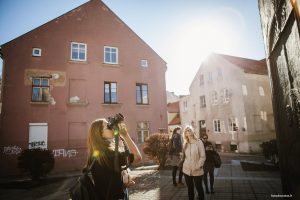
The compact centre is one of Klaipėda’s biggest advantages for visitors. Most of the main sights can be reached on foot, and getting slightly lost is often part of the experience.
Follow the Danė
From the Old Town, make your way towards the Danė River.
The river provides one of the city’s nicest walks and is also where Klaipėda’s maritime character starts becoming more obvious. Boats and yachts move along the water, while historic buildings and modern developments line the banks.
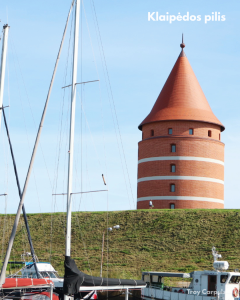
Keep walking towards the harbour and you’ll eventually reach the area around Klaipėda Castle.
The castle itself has a long history, dating back to the medieval period when Klaipėda developed around a fortress built by the Teutonic Order. Today, only parts of the original castle remain, but the site houses the Castle Museum and offers a useful introduction to the city’s history.
Meet the maritime city
From the castle, continue towards the harbour and cruise terminal.
Klaipėda isn’t simply a city next to the sea. Its port has played a central role in its economy and development for centuries, and it remains one of the most important ports in the Baltic region.
For many international visitors, the cruise terminal is their first introduction to Lithuania.
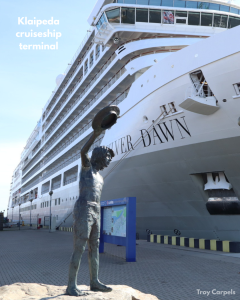
Take some time to watch the ships and harbour activity. The contrast is striking: medieval history, modern cruise ships and heavy industrial infrastructure all exist within a relatively small area.
For a deeper look at Klaipėda’s maritime identity, the Lithuanian Sea Museum is worth saving for the second day, when you’ll cross the water to Smiltynė.
Look for Klaipėda’s hidden characters
Before dinner, take some time to explore the city’s sculptures.
Klaipėda has scattered dozens of sculptures throughout its streets, many of them small enough to miss if you’re simply following a tourist route. Look out for the Old Town Cat, the Magic Mouse and the Black Ghost near the harbour.
They’re not the kind of sights that require an hour-long museum visit. Instead, they give you a reason to slow down and look around.
Evening in the Old Town
As evening arrives, stay around the centre.
The streets become quieter as the day-trippers disappear, but Klaipėda doesn’t go to sleep.
For something more alternative, head to Hofas, a cultural and nightlife space in a former industrial setting. The atmosphere is very different from the historic centre and offers a glimpse of the city’s younger side.
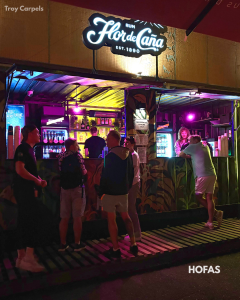
Have dinner there, grab a drink and explore the streets after dark. If you’re unsure where to go, ask a local! They know what’s up.
DAY 2 — Cross the water
Take the ferry to Smiltynė
Start your second morning at the Old Ferry Terminal.
The crossing takes only a few minutes, but the landscape changes almost immediately. The buildings of Klaipėda disappear behind you and are replaced by pine forests, sand and the Curonian Lagoon.
Smiltynė is technically still part of Klaipėda, but it feels like another world.
For visitors arriving by car, there are other ways to reach the Curonian Spit, but taking the ferry is part of the Klaipėda experience.
Explore the Lithuanian Sea Museum
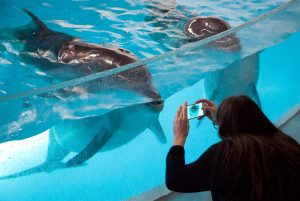
One of the main reasons to make the crossing is the Lithuanian Sea Museum.
Located in the former Nerija Fort, the museum explores marine life as well as Lithuania’s relationship with the sea. It is a natural continuation of the maritime story you started in Klaipėda the previous day.
Allow a couple of hours if you want to properly explore it.
Walk through the forest
After the museum, head towards Smiltynė beach.
The journey is part of the experience. Instead of streets and harbour cranes, you’ll be walking through pine forest, with the sound of the Baltic gradually becoming louder.
Eventually, the trees open up and the beach appears. This is where the pace of the trip should slow down.
Spend the afternoon by the Baltic
Smiltynė’s beach stretches along the coast and offers a completely different experience from the busy harbour you saw the day before.
Go for a swim, walk along the water or simply find a quiet spot in the sand.
If you’re looking for something more active, the coast around Klaipėda is also popular with surfers and other water-sports enthusiasts when conditions allow.
Stay for sunset
Don’t rush back to the ferry.
If the weather cooperates, stay until the evening. The northern coast of Klaipėda is a particularly good place to watch the sun disappear over the Baltic.
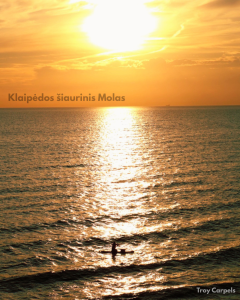
As the beach begins to fill with people watching the last light, the contrast with the industrial harbour from the day before becomes even more striking.
So, is 48 hours enough?
It is — if you accept that you won’t see everything.
Klaipėda isn’t a city that needs to be rushed through. Its charm comes from the contrasts: German and Lithuanian influences, historic buildings and modern ships, a working port and quiet forests, nightlife and empty beaches.
In two days, you can experience all of them.
And perhaps that’s the best reason not to treat Klaipėda as simply the place where your cruise ship arrives.
Stay a little longer. Cross the water. Walk the streets. And let the Baltic lead you through the city.
©Troy Carpels